
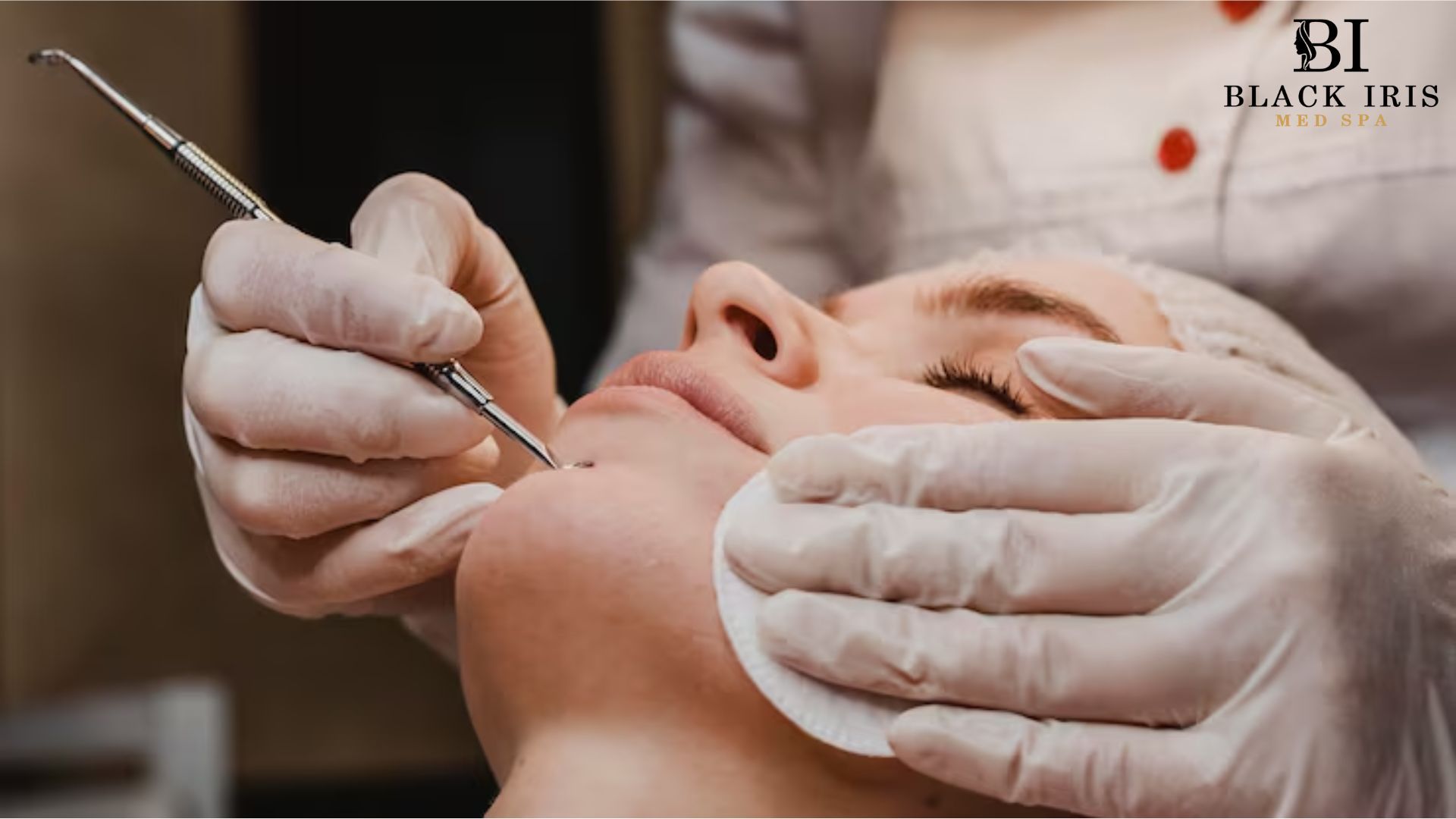
Acne may disappear, but sometimes it leaves behind an unwanted reminder: scars, uneven texture, or dark marks. If you are searching for acne scars treatment Plano, the good news is that you have several professional options to consider.
The important part? Acne scars do not all behave the same way. A treatment that works well for one type of scar may not be the right choice for another. That is why effective treatment starts with understanding your skin rather than simply choosing the most popular procedure.
At Black Iris Med Spa, the goal is to approach acne concerns with a personalized strategy that considers your skin, current breakouts, scar type, and desired results.
Acne Scars vs. Acne Marks: What’s the Difference?
Before discussing treatment, it helps to know what you are actually trying to improve.
Acne can leave behind post-inflammatory hyperpigmentation (PIH), which appears as darker spots after a pimple heals. These marks can gradually fade, although they may take time.
True acne scars are different. They involve changes in the skin's structure and may appear as depressions, uneven texture, or raised areas.
The American Academy of Dermatology notes that depressed acne scars are common and that scars can be difficult to eliminate completely without treatment.
In simple terms, a dark spot is not necessarily a scar. Your skin may just be saying, “I remember that breakout.” A true scar involves deeper structural changes.
That distinction matters when choosing acne scars treatment Plano.
What Causes Acne Scars?
Not every pimple causes a scar. Deep, inflammatory acne has a higher chance of damaging the skin and leaving a lasting mark.
Picking, squeezing, or repeatedly irritating breakouts can also increase the risk of discoloration and scarring.
Once inflammation damages the skin, the body starts its natural healing process. If collagen production becomes uneven, the skin may heal with an indentation or raised area.
This is why treating active acne early can be an important part of preventing future scarring.
Why Acne Control Comes Before Scar Treatment
It can be tempting to focus entirely on old acne scars. However, if new inflammatory breakouts continue appearing, your skin may keep developing new marks.
The American Academy of Dermatology recommends controlling active acne before beginning many acne-scar treatments. Treating the underlying acne can help reduce the development of additional scars.
Professional acne treatments Plano may involve topical medications or other approaches depending on the type and severity of acne.
Common acne-fighting ingredients include:
- Benzoyl peroxide
- Topical retinoids
- Salicylic acid
- Azelaic acid
- Certain topical antibiotics
- Other prescription treatments when appropriate
The AAD's updated acne guidelines support several of these therapies as evidence-based options for acne management.
The right treatment depends on your individual skin. More products do not automatically mean better results. Sometimes, the skin simply needs a smarter routine rather than a larger bathroom shelf.
Types of Acne Scars
Understanding your scar type helps determine which treatment may be appropriate.
Ice Pick Scars
Ice pick scars are narrow, deeper depressions that extend into the skin.
Because they are deeper than some other scar types, they may require more targeted professional treatment.
Rolling Scars
Rolling scars create a wavy or uneven appearance across the skin. They often result from changes in the tissue beneath the surface.
Treatment may focus on improving collagen production and releasing or improving the underlying structure.
Boxcar Scars
Boxcar scars are wider depressions with more defined edges. Their depth and appearance can vary significantly from person to person.
A professional evaluation can help determine which treatment approach makes the most sense.
Raised Acne Scars
Not all acne scars are depressed. Some become raised because the body produces excess collagen during healing.
Raised scars and keloids require a different treatment strategy from depressed acne scars. The AAD notes that options can include medications injected into the scar, laser treatment, and other approaches depending on the individual case.
Microneedling for Acne Scars
Microneedling is one professional option commonly used to improve the appearance of acne scars and uneven skin texture.
During treatment, a device creates controlled microscopic punctures in the skin. This stimulates the body's wound-healing response and encourages collagen production.
The American Academy of Dermatology describes microneedling as a minimally invasive treatment that can improve acne scars, uneven texture, and certain other skin concerns.
One benefit is that microneedling can be used across different skin tones when performed appropriately.
Results generally develop gradually because collagen remodeling takes time. Some people need a series of treatments rather than one appointment to achieve their desired improvement.
That gradual process is worth remembering. Your skin is not a smartphone app—you cannot simply hit “update” and expect a completely different version tomorrow morning.
Chemical Peels for Acne and Acne Marks
Chemical peels use a chemical solution to exfoliate selected layers of skin. Depending on the peel, this can help improve certain types of acne, discoloration, and uneven skin texture.
For acne scars, the AAD explains that chemical peels may help make depressed scars less noticeable by encouraging changes in the skin's collagen and elastin. Treatment strength and the number of sessions depend on the individual's skin and scar characteristics.
Peels can also be useful as part of an acne-focused skincare plan.
However, stronger is not always better. A professional should select the appropriate peel based on your skin type, pigmentation concerns, current acne, and treatment goals.
Laser and Energy-Based Treatments
Laser resurfacing and other energy-based procedures can be used for certain acne scars and texture concerns.
Laser treatment works differently depending on the technology used. Some approaches remove or remodel portions of the skin, while others stimulate collagen without removing the outer skin layer.
Mayo Clinic lists laser resurfacing, radiofrequency-based treatments, chemical peels, microneedling, fillers, and other procedures among potential options for acne scarring.
However, these treatments are not automatically suitable for everyone.
Skin tone, scar type, medical history, downtime expectations, and the specific device all matter. People with darker skin tones may have a higher risk of certain pigment-related complications with some resurfacing procedures, making proper treatment selection especially important.
Can Skincare Help Acne Scars?
Yes, but expectations matter.
Skincare can be useful for managing acne, reducing inflammation, protecting the skin, and improving certain discoloration concerns. It generally cannot completely erase deeper structural scars.
Ingredients such as retinoids, salicylic acid, and azelaic acid may play a role in acne management and improving the appearance of post-acne discoloration.
Daily sunscreen also matters. Sun exposure can make discoloration more noticeable and can work against your efforts to achieve a more even-looking complexion.
For acne-prone skin, a broad-spectrum, non-comedogenic sunscreen with SPF 30 or higher is commonly recommended by dermatology guidance.
What Is the Best Acne Scars Treatment in Plano?
There is no single treatment that works best for every person.
The AAD emphasizes that acne-scar treatment should be individualized based on factors such as scar type, skin tone, severity, expectations, budget, and available downtime.
Depending on your situation, your plan may involve:
- Microneedling
- Chemical peels
- Laser or energy-based treatments
- Professional skincare
- Acne-control treatments
- A combination of procedures
Combination treatment can sometimes make sense because different procedures address different aspects of scarring.
For example, one treatment may focus on texture while another addresses pigmentation or active acne. Your provider can determine whether combining treatments is appropriate for your skin.
How to Choose Acne Treatments in Plano
Choosing acne treatments Plano should involve more than comparing prices or scrolling through before-and-after photos.
Start with an assessment of your actual skin concerns.
Ask questions such as:
- Do I have active acne or mainly old scars?
- Are my concerns dark marks, texture, or true depressions?
- What type of acne scars do I have?
- How much downtime can I manage?
- How many treatments might I need?
- What risks are associated with the recommended procedure?
- What should I do before and after treatment?
A proper consultation can help set realistic expectations and prevent you from choosing a treatment simply because it is trending online.
What to Expect From Acne Scar Treatment
Professional acne scar treatment usually requires patience.
Collagen-based treatments do not transform the skin overnight. Improvement often develops gradually as the body remodels collagen and the skin heals.
The AAD notes that microneedling results can appear over several weeks, with more complete results taking several months. Multiple sessions may also be recommended.
Your provider may also recommend specific pre-treatment and post-treatment skincare.
Following those instructions matters. Picking at healing skin, skipping sunscreen, or introducing irritating products too soon can interfere with recovery.
When Should You Consider Professional Treatment?
If acne has left you with persistent scars or texture that bothers you, professional treatment may be worth considering.
You do not need to wait until your skin becomes “bad enough.” Your concerns are valid if they affect how comfortable you feel in your skin.
At the same time, professional treatment is not always necessary for every mark. Some discoloration can fade gradually with appropriate acne care and sun protection.
A consultation can help determine whether you need a procedure, improved skincare, acne management, or a combination.
Your Plano Acne Treatment Plan Should Be Personal
Acne scars are not one-size-fits-all, so your treatment plan should not be either.
Whether your primary concern is active acne, dark marks, uneven texture, or depressed scars, the first step is understanding what is actually happening in your skin.
At Black Iris Med Spa, patients looking for acne-focused care in the Plano area can discuss their concerns and explore treatment options based on their skin and goals. The emphasis should always remain on appropriate treatment selection, realistic expectations, and long-term skin health.
If you are researching acne scars treatment Plano or comparing acne treatments Plano, remember that the best plan is not necessarily the most aggressive one. It is the one that fits your skin, your concerns, and your goals.